
Phnom Penh, September 2025 — Cambodia and Vietnam are set to officially inaugurate the Tan Nam (Tây Ninh, Vietnam) – Meun Chey (Prey Veng, Cambodia) international border gate later this year, in a move expected to boost bilateral trade and open fresh opportunities for cross-border business.
A National-Level Opening in October
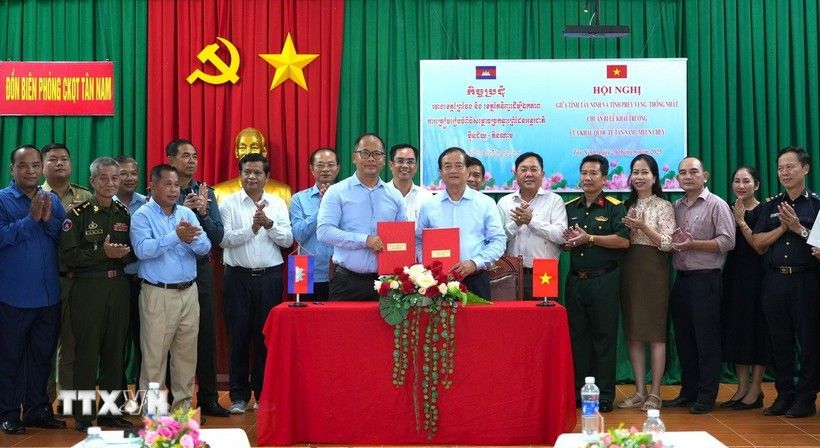
According to official provincial announcements, leaders from Tây Ninh Province, Vietnam និង Prey Veng Province, Cambodia have agreed to hold a coordinated inauguration ceremony between 20–30 October 2025. While the gate has previously been used on a limited basis — with a temporary opening in May 2021 — this year’s event marks a full-scale, national-level launch.
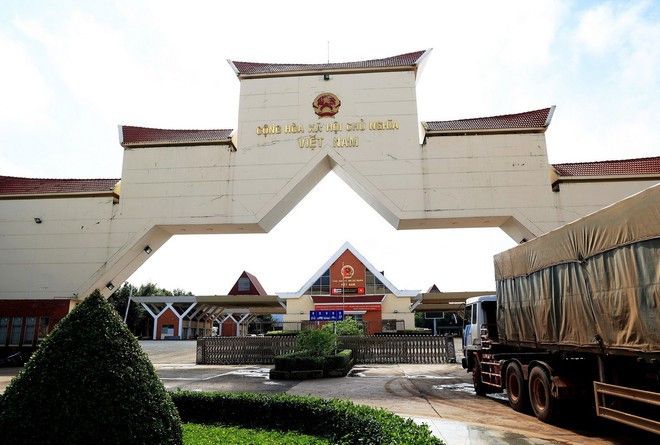
On the Vietnamese side, the government has invested approximately VND 274 billion (around USD 10–11 million) into the project, which includes construction of the national gate, a joint control station and ceremonial square, a border control station, the main road to the crossing, and supporting technical infrastructure such as water, electricity, and fire-prevention systems.
Why It Matters
Officials from both governments have emphasized the border gate’s role in facilitating trade, strengthening provincial cooperation, and promoting economic development. Beyond goods movement, the crossing is expected to deepen people-to-people ties, expand tourism, and enhance border diplomacy.
The launch comes at a time when Cambodia–Vietnam trade is already on an upward trajectory. According to the Vietnam Ministry of Industry and Trade, bilateral trade surpassed USD 10 billion in 2024, and in the first half of 2025 alone, trade volume was reported at approximately USD 6.2 billion. Both governments have set an ambitious goal of reaching USD 20 billion in two-way trade in the coming years.
Impacts on Trade and Logistics
The Tan Nam – Meun Chey gate is strategically located to support cross-border trade in agricultural products, consumer goods, and small-scale commercial shipments, which are expected to see immediate growth. For logistics providers, the crossing offers a shorter and more direct route, reducing transport times between Vietnam’s southern provinces and Cambodia’s eastern regions.
However, officials themselves acknowledge challenges ahead. Current bottlenecks include limited warehousing capacity, insufficient bonded facilities, and underdeveloped border markets, all of which could create congestion as trade flows increase. Industry observers caution that the inauguration is a significant step forward, but not a complete solution to cross-border logistics constraints.
Local and Regional Benefits
For Prey Veng and Tây Ninh provinces, the border gate is expected to stimulate local economies. Increased traffic will likely drive demand for cross-border markets, trucking services, and short-term accommodation. Over time, industrial and logistics investors may identify opportunities for cold storage, warehousing, and light manufacturing facilities near the crossing and along the transport corridor connecting Prey Veng to Phnom Penh.
What Investors Should Watch
For investors in Cambodia’s property and logistics sectors, the border gate represents both opportunity and caution:
- Short-term gains may be strongest in retail, hospitality, and small logistics operations close to the crossing.
- Medium-term potential lies in industrial and warehousing developments, particularly as trade volumes rise and supporting infrastructure is improved.
- Risks remain, especially in the first months of operation, with customs procedures still being refined and logistics networks catching up to demand.
Outlook
The Tan Nam – Meun Chey border gate is a government-backed infrastructure project that reflects Cambodia and Vietnam’s shared strategy to expand trade and regional cooperation. For businesses, it is a tangible signal of growth in cross-border commerce, but it is not a cure-all. Logistics capacity will take time to catch up, and investors should balance optimism with careful planning.
As an agency working at the intersection of real estate and investment, IPS Cambodia (អាភីអេសខេមបូឌា) sees this development as an important milestone in regional integration. Whether for logistics operators seeking expansion or property investors looking for the next frontier, the new border gate deserves close attention in the months ahead.
