

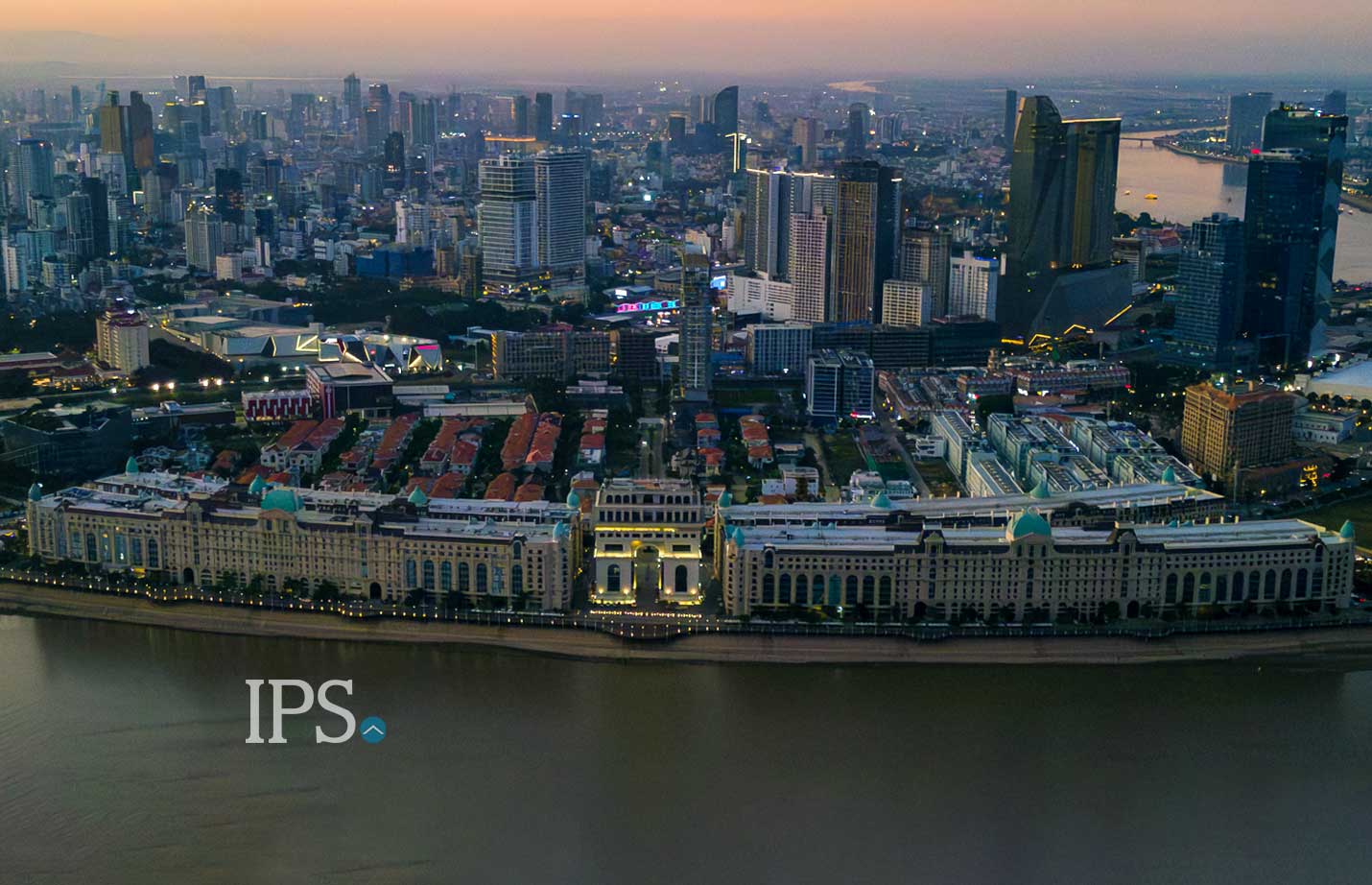
Over the last decade, Phnom Penh’s skyline has changed dramatically. But if you want to see where the real “new” Phnom Penh is being built, you have to look toward the water.
Phnom Penh is one of the few capital cities in the world defined by the meeting of three major rivers: the Mekong, the Tonle Sap, and the Bassac. Historically, these rivers were the lifeblood of trade; today, they are the driving force behind the city’s most prestigious real estate.
The Power of the Waterfront
Riverfront land is a finite resource. You can always build further out into the suburbs, but you can’t “create” more land where three rivers meet. This scarcity is exactly why waterfront districts in major cities, think London’s South Bank or Bangkok’s Riverside, hold their value and tend to appreciate more than anywhere else. In Phnom Penh, the waterfront has moved from being a scenic backdrop to becoming the city’s new growth engine.
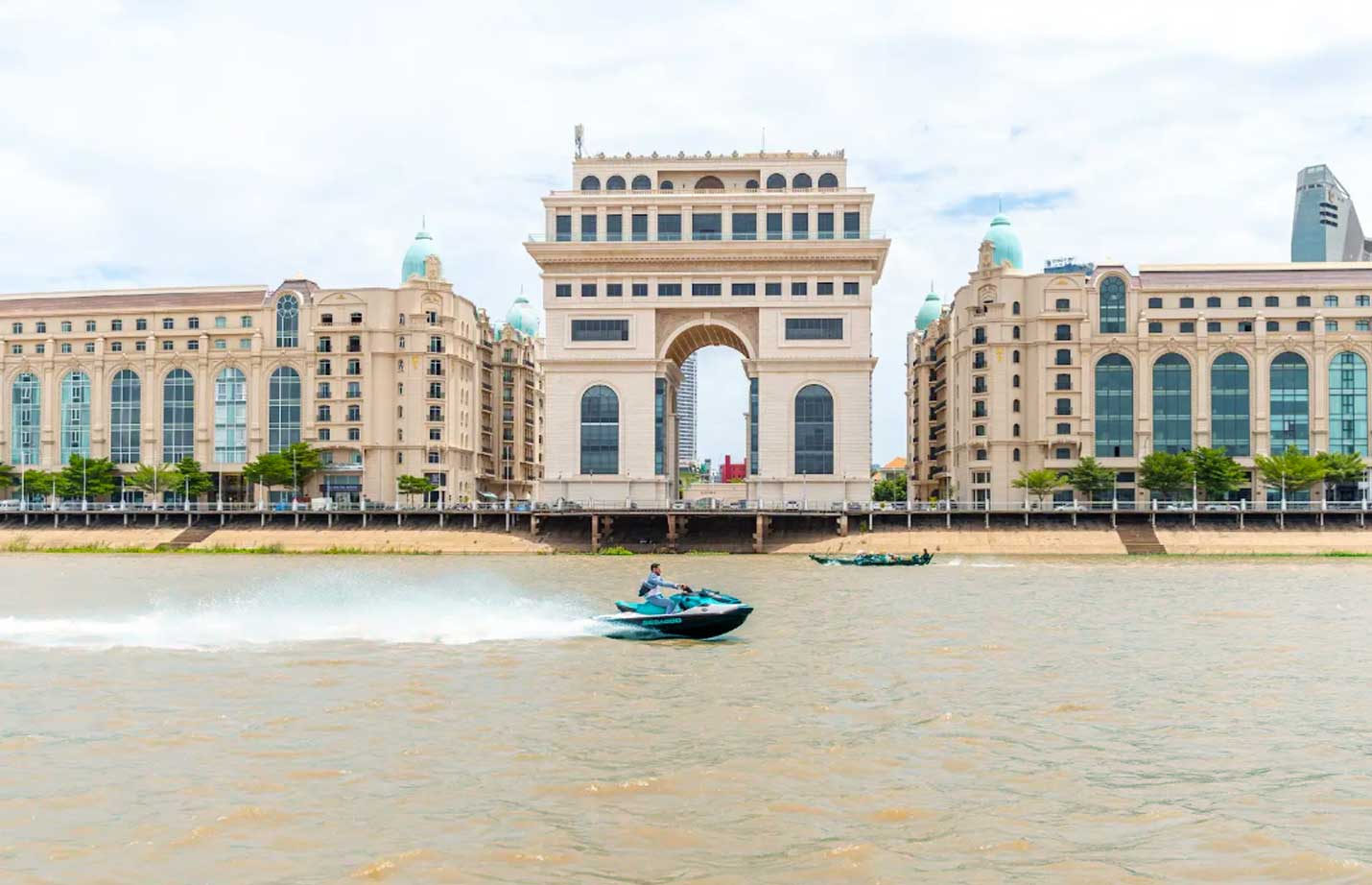
From Fishing Village to Modern CBD
The transformation of Koh Pich (Diamond Island) is one of the most successful urban stories in Southeast Asia. Not long ago, this was a quiet area characterized by small fishing communities. Today, it is a bustling district of glass towers, innovative hubs, international schools, and manicured parks within a prime residential area.
The evolution wasn’t accidental. It was the result of:
- Master Planning: Unlike other parts of the city that grew organically (and often chaotically), Koh Pich was planned as a unified district.
- Infrastructure Investment: The construction of multiple bridges has integrated the island into the heart of the city.
- Modern Identity: It has become one of the go-to spots for Fortune 500 companies, tech firms, creative hubs, and luxury residences.
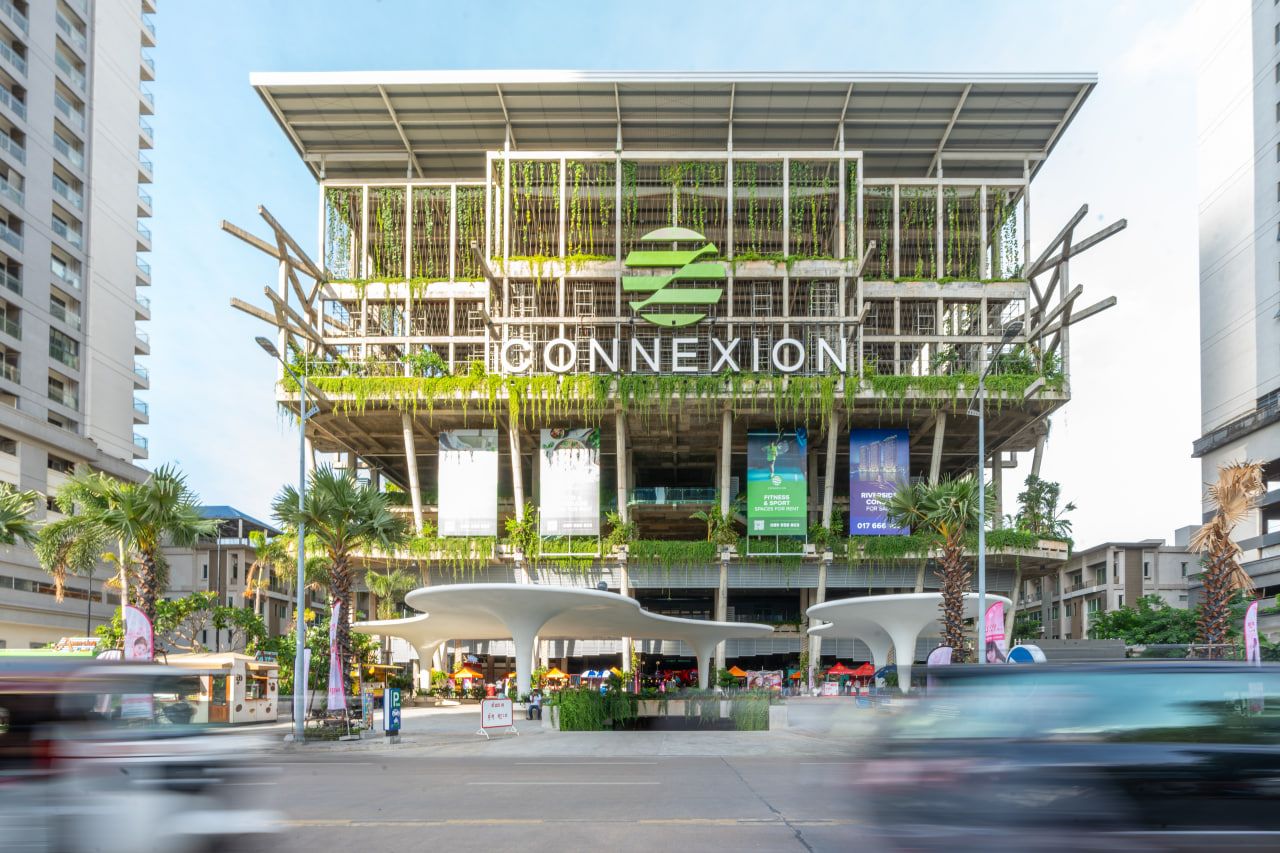
Why Koh Pich is the New Center
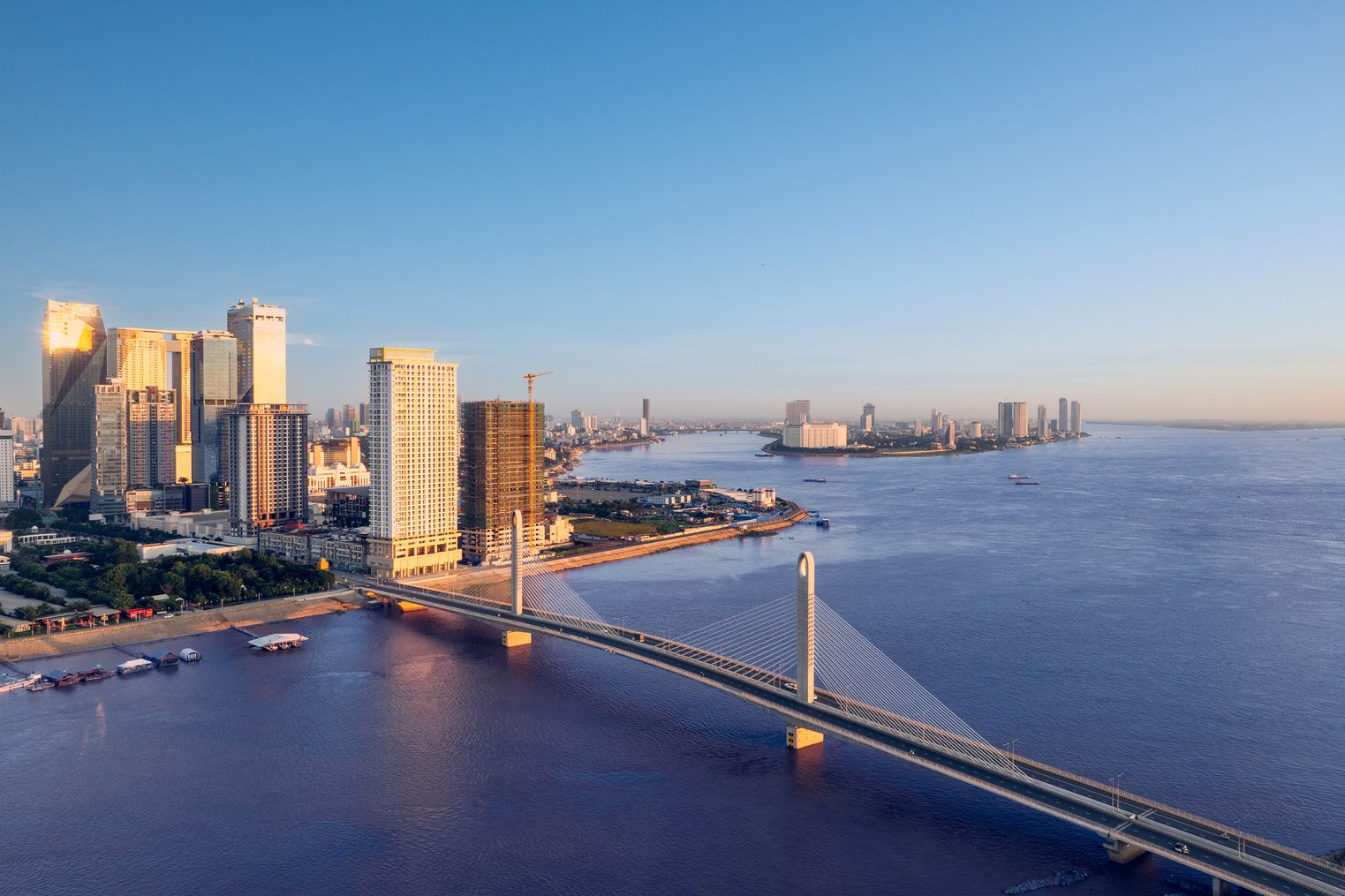
If you look at a map of Phnom Penh today, Koh Pich sits at a strategic crossroads. It serves as the bridge between the established diplomatic quarter of BKK1 and the booming new developments across the river in Koh Norea.
- Proximity: You are minutes away from AEON Mall 1 and the Independence Monument.
- Connectivity: The Norea Bridge has turned what used to be a “dead end” into a major transit artery, connecting the city center to the fast-growing suburbs.
- The Expat Hub: With the Canadian International School (CIS) and over 700 local and international businesses on the island, Koh Pich is one of Phnom Penh’s preferred addresses for professionals.
- Lifestyle Destination: With over eight hectares of landscaped green areas, including Coconut Park, Treellion Park, and the new Koh Pich Central Park, the island combines waterfront living with abundant greenery, while offering a calendar of outdoor events and community activities that keep the district vibrant throughout the year.
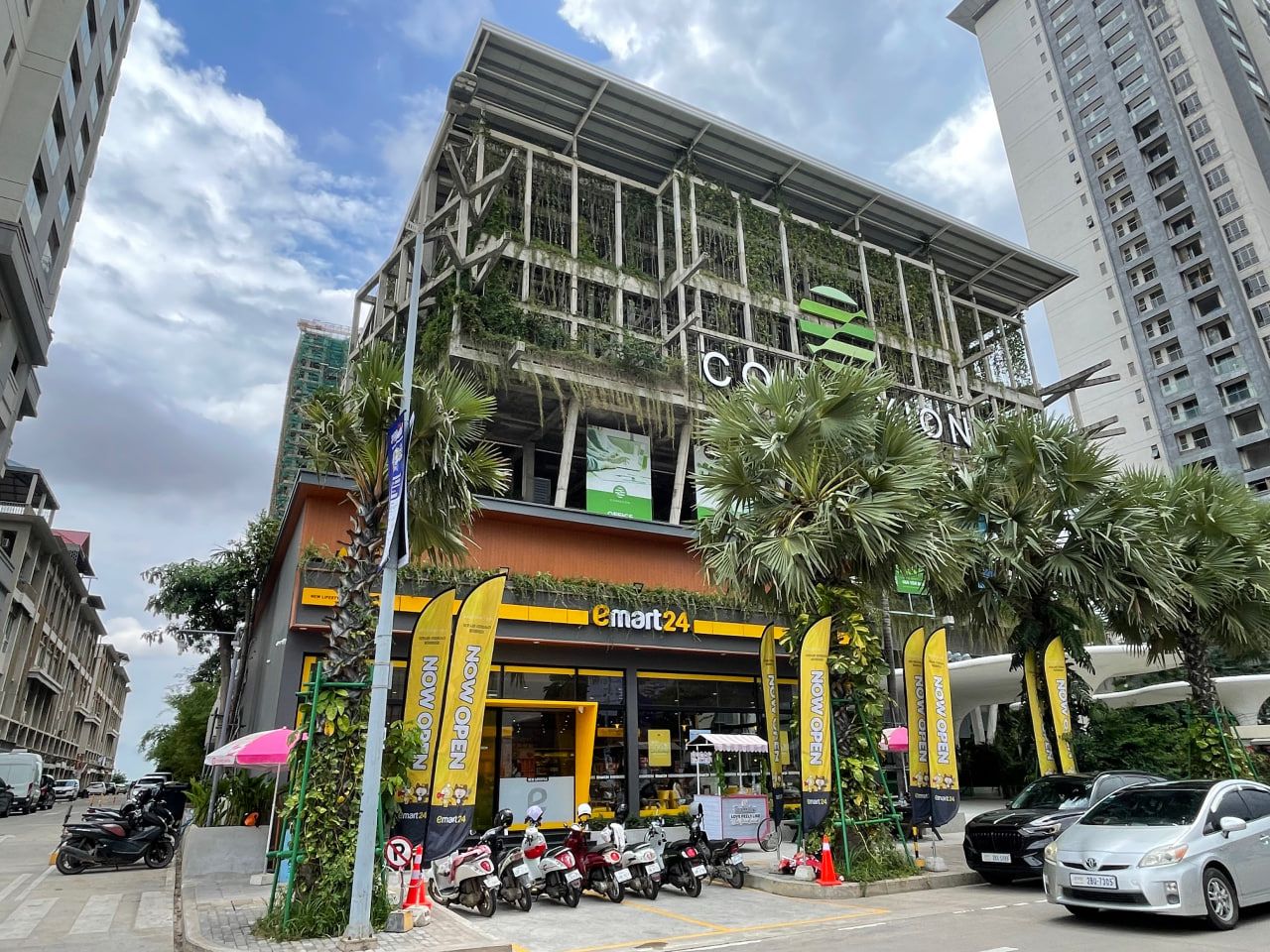
OCIC’s Long-Term Vision for Koh Pich
It’s hard to talk about Koh Pich without mentioning OCIC (Overseas Cambodian Investment Corporation), one of Cambodia’s legacy developers. Since 2006, OCIC has invested over $1.5 billion into shaping the district’s growth and infrastructure.
With a long-term development approach and a master plan guiding the island’s evolution, Koh Pich feels cohesive. You don’t just see disconnected buildings; you see a neighborhood where the parks, roads, and commercial zones work together. This long-term control provides investors with a level of security that is rare in emerging markets.
Raising the Bar with International Brands
A major turning point for the district has been the arrival of global hospitality names. When a brand like The Ascott Limited (from Singapore) enters the market, it changes the game.
- Standardized Quality: They bring international management and service standards, adding consistency and long-term operational reliability.
- Rental Confidence: For investors, having a brand like Somerset manages a property means higher occupancy rates and better-maintained assets.
- Lifestyle Value: Residents get the benefit of “hotel-style” living, concierge, professional housekeeping, and world-class gym facilities, right in their own home.
“At OCIC, our motto and mission have always been building opportunities. For two and a half decades, we’ve contributed to Cambodia’s development, from building the first skyscrapers like Canadia Tower to major infrastructure projects that improve the lives of thousands of commuters.” – Anandha Khaou, OCIC’s Business Development Supervisor.
Case Study: Diamond Bay Garden
If Koh Pich is the crown of Phnom Penh’s waterfront, Diamond Bay Garden (DBG) is its centerpiece. Rising 39 stories (over 150m) at the confluence of the three rivers, this branded residence reflects the ultimate goal of the district: luxury that embraces nature.
Developed by OCIC in partnership with Ascott, DBG offers a unique investment model:
| Feature | Details |
| Developer | OCIC Group |
| Total Floors | 39 Stories |
| Total Units | 591 |
| Unit Types | Studio, 1BR, 2BR, 3BR, & Shophouses |
| Floor Area | 60 sqm to 170 sqm |
| Title Type | Freehold (Strata Title) |
| Completion | 2026 |
Sophisticated Living Spaces
Each residence is designed to maximize natural light and capture panoramic views. With high-quality finishes, these units, studio, 1-bed, 2-bed, and 3-bbed, are built for longevity.
Some of DBG’s amenities include:
- Riverfront Leisure: A 25-meter swimming pool overlooking the Bassac River with a resort-style sun deck.
- Rooftop Socializing: A signature Sky Bar and Sky Garden with 360-degree skyline views.
- The Somerset Advantage: The top 10 floors (27th to 37th) are fully managed by Somerset, offering a 10-year leaseback model with 70% gross guaranteed rental returns (GRR).
Ready to Secure Your Piece of the Waterfront?
Explore our up-to-date listings and find the layout that fits your goals:
View the Main Project Page: Diamond Bay Garden – Full Project Details & Availability
Browse by Unit Type:
- Studios (62 sqm): Price starting from $10X,XXX after discount.
- 1-bedroom (75 sqm): Price starting from $13X,XXX after discount.
- 2-bedroom (106 sqm): Price starting from $18X,XXX after discount.
- 3-bedroom (170 sqm): Price starting from $34X,XXX after discount.
Explore the Neighborhood: See all available properties for sale in Koh Pich
Partner with Cambodia’s Real Estate Experts
At IPS Cambodia, we don’t just list properties; we provide the local insight and international standards required to make a confident investment. Whether you are looking for a “hands-off” managed asset or a primary residence at the confluence of the three rivers, our team is here to guide you.
Contact Us Directly:
- Telegram / WhatsApp: +855 77 959 861
- Email: inquiry@ips-cambodia.com
- Visit Our Office: No. 182 Street 63 (Corner of St. 294), BKK1, Phnom Penh
- Our Telegram Channel: IPS Cambdia
- Our Social: YouTube, Facebook, LinkedIn
