

Planning a move to Cambodia, or thinking about buying property here, comes with a few essentials, and banking sits at the top of that list. Whether you’re an investor transferring funds, an expat managing daily expenses, or a future homeowner preparing for property payments, understanding Cambodia’s banking system helps everything run smoothly.
Fortunately, Cambodia offers one of Southeast Asia’s most user-friendly financial environments for foreigners. Here’s what you need to know.
1. Why Banking Matters When Moving or Buying in Cambodia
A reliable banking setup makes life significantly easier if you’re relocating, investing, or preparing for long-term stays.
For foreign buyers, banks are essential for:
- Sending reservation fees and property payments
- Holding USD safely in a stable, everyday-use environment
- Receiving rental income from investment units
- Making international transfers efficiently
For expats, a local account simplifies:
- Salary deposits
- Paying amenities, rent, and services
- Using mobile payments, KHQR, and local cards
- Avoiding costly international card fees
Understanding how Cambodian banks work helps you plan your relocation or investment with confidence.
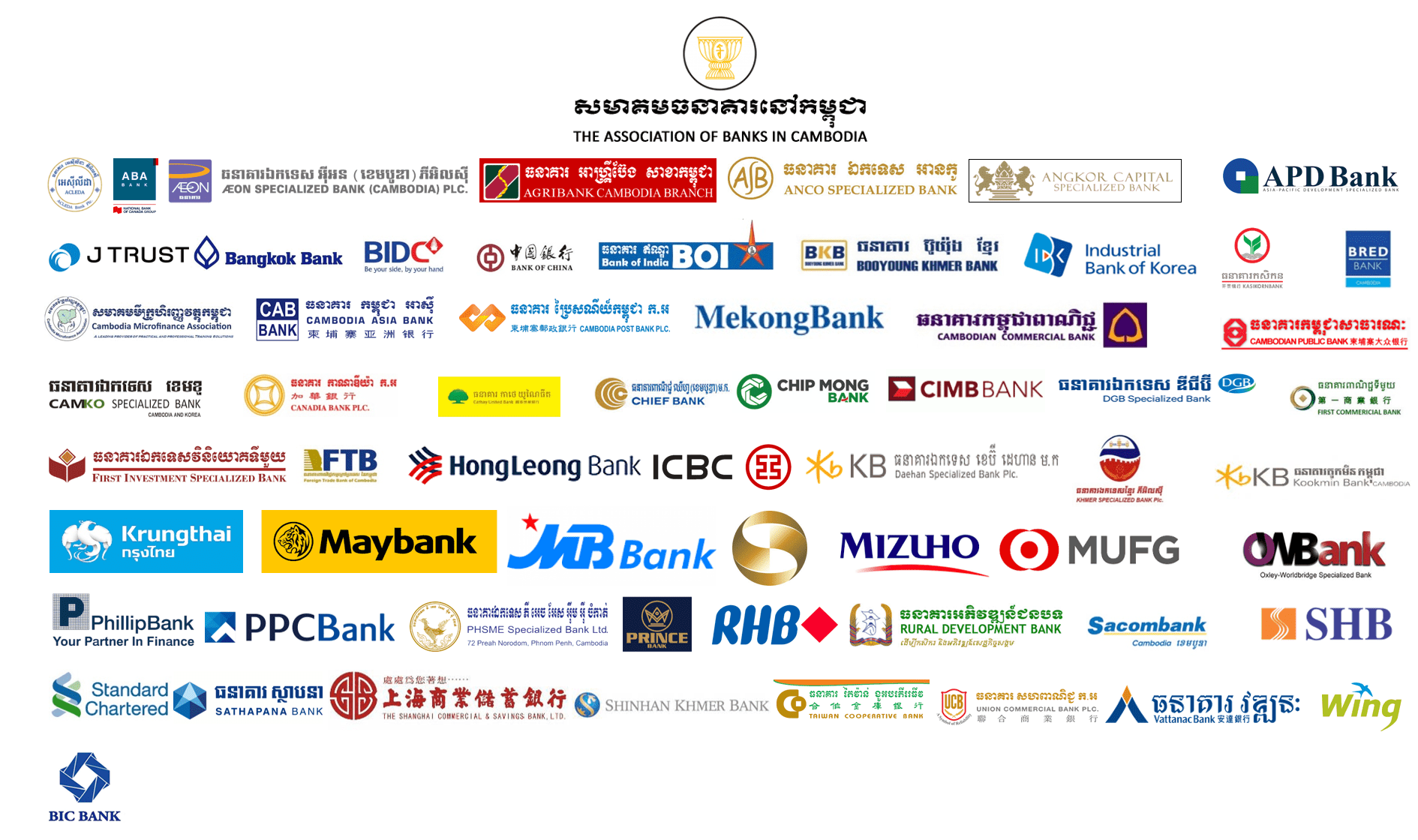
2. What Makes Cambodia’s Banking System Straightforward
Cambodia’s financial landscape is modern, accessible, and designed for ease of use, even if you’re new to the country.
A USD-Friendly Economy
Cambodia is one of the most dollarized countries in Asia.
- USD is widely accepted, especially for real estate, rentals, and travel.
- Banks hold USD accounts by default with no special requirements.
This makes it incredibly convenient for international property buyers.
Modern Mobile Banking
Banks like ABA, ACLEDA, and Canadia offer advanced mobile apps for transfers, bill payments, and QR payments. These apps are available in English and easy to use for daily spending.
KHQR Digital Payments
- KHQR, Cambodia’s national QR payment system, standardizes mobile payments across all banks.
- You can scan the same QR code regardless of which bank you use.
“Bakong” for Seamless Transactions
Bakong, developed by the National Bank of Cambodia, allows:
- Instant transfers between banks
- KHQR payments
- USD and KHR wallet functions
*New Regional QR Payment Connectivity (Bonus Insight)
Cambodia has recently expanded its digital ecosystem internationally. In 2025, the first phase of Cambodia–Singapore cross-border QR payments went live, allowing Cambodian bank users to scan SGQR codes in Singapore for real-time payments directly from their KHR accounts. This follows similar QR integrations with Thailand, Vietnam, Laos, Japan, and more.
This growing regional interoperability strengthens the convenience of Cambodian banking, especially for expats and frequent travelers.

3. Can Foreigners Open a Bank Account in Cambodia?
Yes. Foreigners can open personal bank accounts easily as long as they provide the required documents. The process usually takes 20–40 minutes at the branch if everything is ready.
Typical Requirements
Most banks require:
- Passport (valid)
- Valid visa or e-arrival stamp
- Local phone number (for OTPs and banking app setup)
- Local address (hotel or temporary residence is often accepted)
Some banks may request:
- Employment letter
- Lease agreement
- Proof of funds
What to Expect at the Branch
- Your photo will be taken.
- You sign forms and provide your signature specimen.
- USD and KHR accounts are usually opened together.
- ATM card can be issued immediately or within 1–2 days.
Common Timelines
- Account opening: same day
- Debit card: same day or next business day
- Mobile banking activation: immediate
Based on Real Client Experiences
Foreigners find the process:
- Faster than in many countries
- English-friendly
- Digitally convenient (app setup is quick)
- Flexible about addresses

4. The Banks Most Foreigners Prefer to Use
Here are the banks commonly recommended to investors and expats.
ABA Bank (Advanced Bank of Asia)
- Most popular among foreigners
- Excellent mobile app
- Has a big ATM network
- Easy transfers & KHQR payments
- Strong English-language support
ACLEDA Bank
- Largest branch and ATM network
- Very reliable for business accounts
- Ideal for those needing cash access in all provinces
Canadia Bank
- Long-established, local giant
- Very stable for USD holding
- Good for property-related transactions
Sathapana Bank
- Clean, modern app
- Simple onboarding
- Good customer service
PPCB (Phnom Penh Commercial Bank)
- Korean-owned
- Efficient for corporate & personal accounts
- Faster turnaround for certain document reviews

5. Managing Your Money as a Foreign Resident
International Transfers
Most banks allow SWIFT transfers.
ABA and Canadia tend to process incoming international transfers more quickly than others.
Receiving Rental Income
- USD accounts make receiving rent straightforward.
- Property management companies can transfer directly to your local account.
Paying for Property
Developers commonly accept:
- SWIFT transfers
- Local bank transfers
- Cashier’s checks
- Direct deposits
Using USD Daily
USD is used for:
- Groceries
- Restaurants
- Hotels
- Transport
- Real estate payments
KHR (riel) is used more for small daily purchases, but KHQR is quickly becoming the default for everything.
Cards, ATMs, and Fees
- Most ATMs allow large USD withdrawals (up to $1,000–$5,000 depending on the bank and your card type).
- Local cards avoid international withdrawal fees.
- Visa/Mastercard debit cards work globally.

6. How Banking Connects to Buying Real Estate
A smooth banking setup makes the property-buying process significantly easier.
Sending Reservation Fees
Developers and agencies will give clear instructions for SWIFT or local transfers.
Handling Progress Payments
Banks enable fast:
- Milestone payments
- Deposit transfers
- Currency handling
Arranging Monthly Transfers
If buying an off-plan unit, you can set reminders or scheduled transfers through the bank’s app.
Receiving Rental Income
Your property management team can deposit returns directly into your local USD account.
IPS Guidance
IPS can help clients understand documentation required during transfers, typical payment timelines, and the most efficient banking methods for property purchases—ensuring you avoid delays.

7. Practical Tips for Everyday Banking in Cambodia
USD Bill Condition Matters
Cashiers often reject:
- Torn bills
- Stained bills
- Old small-head USD notes
Passports
Some banks require your passport for large withdrawals or account changes.
Mobile Apps
ABA, ACLEDA, and Canadia apps are widely considered the easiest to use.
QR Payments
KHQR works with all major banks, and you can pay nearly everywhere—from cafés and malls to street vendors.
ATMs
For safety and reliability:
- Use ATMs attached to branches or inside malls.
- Make sure you check the bills’ authenticity before leaving the ATM.
- Avoid standalone ATMs at night.

Banking in Cambodia is modern, USD-friendly, and surprisingly simple for foreigners. Whether you’re planning to invest, relocate, or purchase a home, having a local bank account allows you to manage funds confidently, handle property payments smoothly, and settle into daily life without complications.
For anyone exploring Cambodia’s real estate market, this ease of banking is one of the biggest advantages of living, or investing, here.
Read more: Bitcoin to Bricks: Buying Property Using Crypto in Cambodia
Read more: Property Ownership Guide for Foreigners
📞 Contact us at inquiry@ips-cambodia.com or visit our Investors Guide for more resources.
