
Cambodia – Sustained Economic Growth
In 2009, when I first told my family I was moving to Cambodia I was met with blank stares, uniform negativity and even a ‘where is Cambodia?’ Now family and friends are lining up to visit and explore the wonders of Angkor Wat, sample the delights of Phnom Penh’s burgeoning restaurant and bar scene and relax on the beaches of Sihanoukville.
Cambodia has come a long way in the short time that I have been here and its rise is even more extraordinary when you consider it’s tragic past. So what’s underpinning the rise of Cambodia? Put simply, Cambodia’s rapid economic growth.
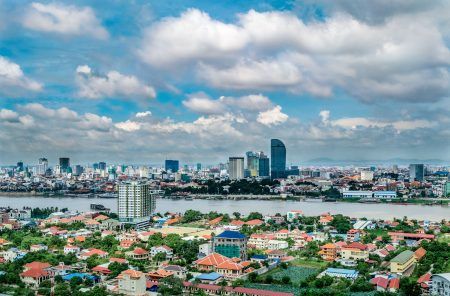
Cambodia has experienced two decades of very strong economic growth, averaging 7.6% Gross Domestic Product (GDP) from 1994 to 2015. This ranks Cambodia as the sixth fastest growing economy in the world during the past 21 years. This phenomenal, sustained growth has transformed Cambodia from one of the world’s poorest countries to being reclassified by the World Bank as a lower middle-income country in 2016.
In its most recent update, the Asian Development Bank (ADB) forecast growth to remain strong at 7.1% for both 2017 and 2018. The World Bank is a little more conservative with its growth forecast of 6.9% for the next two years and remaining strong at a projected 6.7% in 2020.
To get some understanding as to how good Cambodia’s projected growth is we only need to review its position in the fastest growing economies in Southeast Asia. Using data provided by ADB economies in the SE Asia region are projected to grow at an average of 5% in 2018. Myanmar the fastest at 8%, Cambodia second at 7.1% ahead of its Indochina neighbors in Thailand (3.6%), Vietnam (6.7%) and Laos (7%).
Cambodia’s growth has been underpinned by strong garment exports, a thriving tourism sector, a focused and gradual modernization of the agricultural sector and continued resilience from the construction and real estate sectors. The projected extension of growth in these key sectors will ensure Cambodia continues to be one of the key developing markets in Asia.
