New
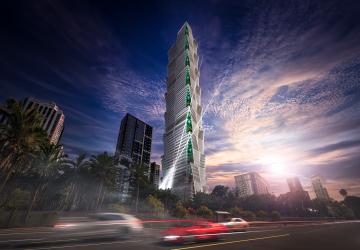
G.A.T.O Tower
BKK1, BKK
Starting from $98,115
Investor Guide
Explore Phnom Penh Metro plans, proposed transport corridors and condos near key routes that property buyers and investors may want to watch.

Phnom Penh continues to expand, bringing new residential districts, commercial centres and infrastructure to Cambodia’s capital. As the city grows, attention is increasingly turning to the Phnom Penh Metro and the role that mass transit could play in its future.
For property buyers, this is particularly interesting. Several existing and upcoming condominium developments are located near major transport corridors that have appeared in Phnom Penh’s long-term public transport planning.
However, there is an important distinction to make.
No final Phnom Penh Metro network, station locations, construction timetable or opening date has been officially confirmed. Historical routes provide useful insight into how Phnom Penh’s transport network could develop, but they should not be treated as a final metro map.
Therefore, buyers should view potential metro connectivity as a long-term infrastructure consideration rather than a guaranteed property benefit.

Read more: Phnom Penh Bridge Guide 2026: Every Completed and Upcoming Project
Plans for a modern mass-transit system in Phnom Penh are not new. Different forms of urban rail have been studied for more than a decade as the capital’s population, built-up area and traffic have grown.
One of the most comprehensive early studies was the Project for Comprehensive Urban Transport Plan in Phnom Penh Capital City, prepared with the Japan International Cooperation Agency (JICA) and completed in December 2014.
The study developed a comprehensive urban transport plan with a target year of 2035 and included pre-feasibility work for priority public transport infrastructure.
JICA ultimately selected four target public transport corridors:
These corridors were intended not only to improve transport but also to connect central Phnom Penh with expanding residential, commercial and suburban areas.
The 2014 plan is important for understanding Phnom Penh’s transport history. Nevertheless, these four corridors should not be interpreted as confirmed routes for the metro currently being studied.

Phnom Penh’s mass-transit plans have continued to evolve since the JICA study.
Over the years, authorities have considered several technologies, including Automated Guideway Transit (AGT), light rail, monorail and underground metro systems.
In March 2024, Deputy Prime Minister and First Vice-President of the Council for the Development of Cambodia (CDC) Sun Chanthol chaired discussions with China Metro Group and Guangzhou Metro Group about possible mass-transit solutions.
Referring to the different systems that had previously been studied, he said:
“It is important to consider every option”
He explained that the appropriate solution would need to account for Phnom Penh’s current and future size, population and wider transport infrastructure.
This reinforces an important point: the final Phnom Penh Metro system does not necessarily have to follow one of the earlier proposals.

The current stage of the Phnom Penh Metro project began after the Ministry of Public Works and Transport (MPWT) and Asian Infrastructure Investment Bank (AIIB) signed a Memorandum of Understanding in Beijing on September 26, 2024.
By March 2025, MPWT and AIIB experts had begun preliminary work to assess the feasibility of a modern public transport system for Phnom Penh.
Study teams examined major transport corridors and important locations, including bus terminals, Phnom Penh Railway Station, the former Phnom Penh International Airport, Techo International Airport, new development areas and satellite cities.
According to MPWT spokesperson Phan Rim, the work is connected to previous transport planning rather than replacing it entirely.
“This study is an additional study on public transport in Phnom Penh”
Previous studies examined options including light rail, AGT, Bus Rapid Transit and tramways.
Importantly, the ministry also cautioned during the preliminary stage that conducting a study does not automatically mean construction will proceed.
By December 2025, however, the project had progressed further. MPWT reported that the proposed underground metro network had reached the stage of defining preliminary route alignments.
That represents progress, but preliminary alignments are still different from an approved final route and confirmed station network.

One of the biggest changes since JICA completed its 2014 study is Phnom Penh’s airport geography.
The original A2 West Corridor mainly followed Russian Federation Boulevard and Kampuchea Krom Boulevard. One of its objectives was to support airport access.
At the time, Phnom Penh International Airport was located along the city’s western transport axis.
Today, Techo International Airport has shifted the airport connectivity discussion south of Phnom Penh. Therefore, the airport component of the original A2 corridor cannot simply be applied to the city’s current transport needs.
Authorities have consequently examined new rail connections between central Phnom Penh and Techo International Airport.
In 2023, then-Minister of Public Works and Transport Sun Chanthol discussed a potential light-rail connection between the city and the new airport, including the possibility of serving the AEON Mall Mean Chey area.
Further proposals followed. In March 2024, China Metro Group and Guangzhou Metro Group presented feasibility work involving a light railway between Phnom Penh and Techo International Airport alongside potential urban metro development.
As recently as August 2025, however, MPWT confirmed that the light-rail and subway proposals remained under review, while authorities also considered bus connectivity between the airport and central Phnom Penh.
This is another reason buyers should not rely too heavily on historical metro maps. Phnom Penh has changed, and the transport network being studied today must respond to the city that exists now.

The Phnom Penh Metro has moved beyond being merely an idea, but it remains in the planning and study process.
MPWT confirmed in December 2025 that preliminary route alignments were being defined with participation from AIIB experts, the Department of Railways and other relevant institutions.
However, this does not mean that final routes or stations have been approved.
For property buyers, the distinction is crucial.
At this stage:
| Phnom Penh Metro Item | Current Status |
|---|---|
| Metro planning | Under study |
| MPWT–AIIB work | Ongoing |
| Preliminary route alignments | Being studied |
| Final metro network | Not confirmed |
| Final station locations | Not confirmed |
| Final construction cost | Not confirmed |
| Construction start date | Not confirmed |
| Opening date | Not confirmed |
Therefore, claims that a condominium will have a specific “future metro station” nearby should be treated cautiously until official station locations are announced.
Location is one of the most important considerations when buying real estate.
Access to employment centres, schools, shopping malls, restaurants, hospitals and major roads can influence both the convenience of living in a property and its attractiveness to future tenants or buyers.
Public transport can add another layer of accessibility.
Socio-economic analyst Chey Tech, speaking about the proposed metro in 2025, argued that a successful system could help address traffic problems while supporting urban development.
“If the metro succeeds, it will help urban development”
He also suggested that improved infrastructure could contribute to investment, tourism and Cambodia’s wider economy.
For condo buyers, however, these potential benefits should be viewed from a long-term perspective.
A future metro does not guarantee that nearby condominium prices will increase. Development quality, management, location, surrounding amenities, supply, rental demand and purchase price remain important considerations.
A more balanced investment approach is therefore:
Existing location fundamentals first. Potential future metro connectivity second.

Several condominium developments are already positioned close to major urban corridors that appeared in earlier Phnom Penh transport planning.
These projects may be worth watching as the current metro study progresses.
However, the developments below do not have confirmed future metro stations. Their inclusion is based on proximity to historically identified transport corridors and established urban axes.
The JICA plan identified two sections of a major north-south public transport axis.
A1 mainly followed northern Monivong Boulevard, while A4 primarily followed southern Monivong Boulevard.
The northern section was intended to strengthen the city’s north-south axis, reduce traffic entering central Phnom Penh and connect northern suburban areas. The southern section similarly aimed to improve north-south connectivity toward growing southern areas.
This makes the wider Monivong corridor particularly interesting for buyers considering central Phnom Penh.
G.A.T.O Tower is one of BKK1’s major upcoming residential developments.
Its central location provides access to restaurants, cafés, offices, retail and other amenities, while also placing residents within convenient reach of Phnom Penh’s major central roads.
For buyers already interested in BKK1’s established residential and rental market, potential future improvements to public transport could provide an additional long-term connectivity advantage.

UC88 Wyndham Garden is a 46-storey development in BKK1 combining residential and hospitality components in one of central Phnom Penh’s most established districts.
Its location already provides access to several major roads and surrounding commercial areas.
Therefore, the property’s appeal does not depend on the Phnom Penh Metro. Instead, potential mass-transit improvements could complement its existing central connectivity.

J Tower 2 is a completed residential development on Street 398 in BKK1, placing it within central Phnom Penh and within convenient reach of the wider Monivong transport axis.
Its established location already provides access to BKK1, Tonle Bassac and surrounding commercial and lifestyle areas. For property buyers, potential improvements to north-south public transport could complement this existing connectivity rather than form the project’s primary investment case.

J Tower 3 is located on Street 71 in Tonle Bassac, immediately south of BKK1. The 77-storey development is positioned within Phnom Penh’s expanding southern-central residential area.
Its location makes J Tower 3 particularly relevant when considering the historical A4 north-south transport corridor. If future mass transit improves connectivity between central and southern Phnom Penh, developments in this area could potentially benefit from easier movement across the city.
However, as with the other projects highlighted here, no future metro station near J Tower 3 has been confirmed.

ODOM is a major mixed-use development on Norodom Boulevard in Tonle Bassac, combining residential, commercial and office components within one centrally located project.
Although ODOM is positioned on Norodom Boulevard rather than directly on the historical A4 Monivong alignment, its location is relevant to the wider north-south connectivity of central and southern Phnom Penh.
The development already benefits from access to BKK1, Tonle Bassac, Independence Monument and the major commercial areas surrounding Norodom and Monivong boulevards. Improved mass transit along Phnom Penh’s central north-south axis could therefore complement this existing connectivity.
For buyers and investors, however, ODOM’s established central location should remain the primary consideration. Any potential benefit from the future Phnom Penh Metro should be viewed as additional long-term upside, as no metro route or station near ODOM has been confirmed.

Le Condé BKK1 adds another major residential project to the BKK1 market.
Its position within central Phnom Penh makes it relevant to buyers who want access to the city centre while also considering how future public transport could change mobility across the capital.
As with the other developments in this article, buyers should evaluate its existing location first rather than assuming a future metro station will be located nearby.

Time Square 5 (TS 306) is particularly relevant because of its proximity to Monivong Boulevard.
The development combines a BKK1 address with convenient access to one of Phnom Penh’s most important north-south roads.
This creates an attractive transport proposition even without a metro. If future mass transit eventually serves the wider Monivong axis, that connectivity could become an additional advantage.

Time Square 6 (TS 302) is another Time Square development located in BKK1.
The surrounding district already offers strong access to commercial activity, restaurants, international services and residential amenities.
Potential future public transport would therefore enhance an established urban location rather than create its accessibility from scratch.

Time Square 9, The Gatsby Residence, continues the Time Square portfolio in central Phnom Penh.
Its BKK1 location positions the development within the wider central area surrounding Phnom Penh’s north-south transport spine.
For buyers comparing newer BKK1 developments, the evolution of the Phnom Penh Metro is another long-term infrastructure factor worth monitoring.

Time Square 7 is a major upcoming condominium development in Boeung Kak 1, Toul Kork, positioned around the intersection of Streets 335, 538 and 540.
Its location makes it relevant to the northern side of Phnom Penh’s long-term transport story. The JICA plan identified improved north-south connectivity as an important part of the capital’s future transport network, while Boeung Kak was also identified as one of Phnom Penh’s anticipated high-density urban centres.
For buyers considering Toul Kork, Time Square 7 therefore combines an already established residential and commercial district with the potential longer-term benefit of improved public transport connections across northern and central Phnom Penh.
As with the other developments highlighted here, this does not indicate that a future metro station has been confirmed near the project.

Garden Residency 2 is a completed condominium development on Street 1932 in Phnom Penh Thmey, Sen Sok.
Unlike the BKK1 projects located closer to the historical Monivong corridor, Garden Residency 2 sits farther north. Its relevance therefore comes from Phnom Penh’s broader northern expansion and the need for improved connections between growing suburban districts and the city centre.
Sen Sok has developed into a major residential and commercial area, while Garden Residency 2 already benefits from its position within this expanding part of Phnom Penh.
For buyers looking outside the traditional city centre, potential improvements to northern public transport connectivity could become an additional long-term advantage. However, Garden Residency 2 should be considered a wider potential beneficiary of future mass transit rather than a development directly beside a confirmed metro alignment.

The JICA transport plan identified A2 as Phnom Penh’s West Corridor, mainly following Russian Federation Boulevard and Kampuchea Krom Boulevard.
The corridor was designed to respond to the capital’s westward urban expansion, reduce vehicle traffic entering the city centre and improve connections between central Phnom Penh and growing western suburban areas. It was also intended to support airport access.
However, the airport component needs to be viewed in its historical context.
When the JICA study was completed in 2014, Phnom Penh International Airport was located along the city’s western transport axis. Today, Techo International Airport has shifted the capital’s international airport connectivity south of Phnom Penh.
Therefore, the historical A2 corridor should not be interpreted as a confirmed future airport metro route.
Nevertheless, Russian Federation Boulevard and Kampuchea Krom Boulevard remain major east-west urban arteries. For property buyers, developments positioned around these established corridors may therefore be worth watching as the current Phnom Penh Metro study determines its future priority routes.
Romdoul City is particularly relevant to the A2 discussion because of its position along the wider Russian Federation Boulevard corridor.
Unlike projects that are simply located somewhere in western Phnom Penh, its relationship with one of the major roads identified in the historical A2 transport plan gives buyers a clearer reason to watch the development from a future connectivity perspective.
Russian Federation Boulevard already provides an important connection between central and western Phnom Penh. Therefore, the project’s location has transport value regardless of whether the eventual Phnom Penh Metro follows the historical A2 alignment.
If future mass transit does serve this part of the capital, improved public transport could become an additional long-term advantage for residents and property owners.
However, no future metro station at or near Romdoul City has been confirmed.

Star City is a completed condominium development located at 110 Russian Federation Boulevard in Sen Sok, placing it directly along one of the major roads identified in JICA’s historical A2 West Corridor.
Completed in 2019, the development offers studio and one-bedroom residences and benefits from established access to commercial, educational, healthcare and retail destinations across western and central Phnom Penh.
Its position on Russian Federation Boulevard makes Star City particularly relevant when considering the potential long-term evolution of Phnom Penh’s westward public transport network. Even without a future metro, the boulevard already serves as an important east-west connection across the capital.
If future mass transit eventually follows or connects with this corridor, Star City could potentially benefit from improved accessibility. However, no metro route or station near the development has been confirmed, so its existing location and connectivity should remain the primary considerations for buyers.

The southwest corridor tells a different property story.
JICA’s A3 corridor mainly followed Monireth Boulevard and Veng Sreng Road.
Its objectives included responding to southwestward urban expansion, connecting southern suburban areas and supporting development along the Veng Sreng Road axis.
That makes the corridor relevant to buyers considering areas beyond Phnom Penh’s traditional premium central districts.
Kingston Royale is positioned within Phnom Penh’s expanding southern residential market.
The development offers buyers an alternative to premium central BKK1 condominiums while remaining connected to established districts around Russian Market and the wider south of the capital.
Its position makes the evolution of the southwest transport network particularly relevant to its long-term connectivity.

L Tower 1 is located in the wider Boeung Tompun area, close to Kingston Royale.
Boeung Tompun has experienced substantial residential development as Phnom Penh has expanded southward.
Improved public transport across the southwest could therefore become particularly valuable for residents travelling between these growing neighbourhoods and central Phnom Penh.

Anata Residence provides another interesting example in Steung Meanchey.
Its location is especially relevant because the historical A3 corridor was designed to respond to southwestward urban expansion and improve connections around the Monireth and Veng Sreng axis.
For buyers considering Steung Meanchey, existing accessibility and property fundamentals should remain the priority. Future mass transit can then be viewed as possible longer-term infrastructure upside.

Time Square 8 brings the Time Square portfolio to the Russian Market area.
Russian Market has developed into one of Phnom Penh’s popular mixed residential and lifestyle districts, with cafés, restaurants, markets and relatively convenient access to BKK and central Phnom Penh.
Its position also makes it relevant to the wider southwest transport story.

Time Square 11, also known as Time Castle, is located in BKK3.
Its position between the established central BKK districts and Phnom Penh’s wider southwest makes the project worth watching as the city’s transport planning develops.
Again, the potential metro should complement the project’s existing location rather than form the entire reason for buying.

Potentially, but there is no guarantee.
Improved public transport can make an area easier to access. In turn, better accessibility may make certain neighbourhoods more attractive to residents, businesses and tenants.
However, property values are influenced by many factors.
Buyers should consider the quality of the development, developer track record, management, surrounding infrastructure, amenities, supply and demand, rental potential and purchase price.
There is also an important difference between purchasing beside an operating transit station and buying near an unconfirmed proposed corridor.
Therefore, buyers should be cautious about paying a significant premium solely because a property is marketed as being near a “future Phnom Penh Metro station.”

For some buyers, proximity to one of Phnom Penh’s major transport corridors may be a worthwhile consideration.
However, the property should make sense with or without the metro.
BKK1 already benefits from a strong concentration of commercial activity, restaurants, international services and residential demand.
Russian Market is already an established lifestyle and residential district.
Meanwhile, Boeung Tompun, Steung Meanchey and southern Phnom Penh continue to develop as the capital expands beyond its traditional centre.
These existing fundamentals should form the basis of a property decision.
If the eventual Phnom Penh Metro improves accessibility to one of these locations, that can become an additional long-term benefit.

The Phnom Penh Metro represents one of the capital’s most interesting long-term infrastructure developments.
The idea has evolved through years of transport planning, from JICA’s earlier public transport corridors to studies of AGT, monorail, subway and light-rail systems, and now the current MPWT–AIIB study.
There has been tangible progress. Preliminary route alignments are being studied, and authorities continue to evaluate how a future system could connect Phnom Penh’s major urban areas.
Nevertheless, final routes and station locations remain unconfirmed.
For property investors, the most sensible strategy is therefore simple:
Buy a good property in a good location first. Treat future Phnom Penh Metro connectivity as potential upside, not a guarantee.

Whether you are looking for a condominium in BKK1, BKK3, Russian Market, Boeung Tompun, Steung Meanchey or another growing Phnom Penh district, IPS Cambodia can help you compare properties based on location, development quality and long-term investment considerations.
Explore Phnom Penh condos with IPS Cambodia and find a property that works for you today while keeping an eye on the infrastructure shaping the city’s future.


Buying, Condo Sales, +2 more Buying, Condo Sales, Investor Guide, Property Market news
Discover G.A.T.O Tower Phnom Penh, a 296-meter, 67-story luxury mixed-use landmark at Norodom Blvd & St. 334 in BKK1.

Investor Guide
Learn how escrow services in Cambodia work, how they protect property buyers and sellers, and when to use escrow in a real estate transaction.

Investor Guide, Expat Guide
Buying off-plan property in Cambodia offers high capital gains, but carries risks. Follow our 2026 due diligence checklist to invest safely and avoid major pitfalls.