Cambodia Property Update: Latin Alphabet Names Now Allowed on Strata Titles for Foreign Buyers
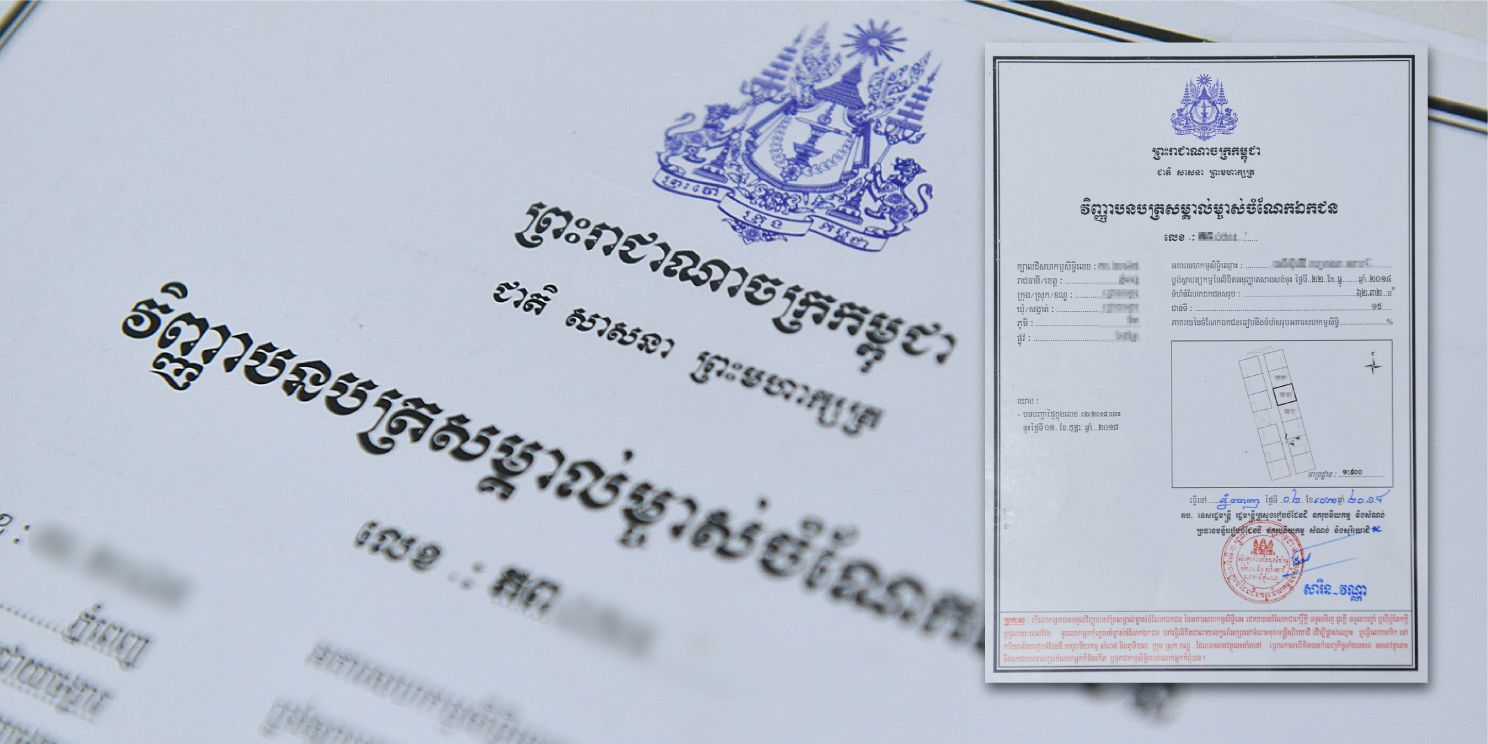
International real estate investors looking at the Kingdom’s property market just received a major administrative upgrade regarding their Cambodia strata title documentation. The Ministry of Land Management, Urban Planning and Construction (MLMUPC) has officially modified the formatting of condominium ownership certificates. Property owners’ names can now be registered in both the traditional Khmer script and the Latin alphabet (Roman characters).
Sarin Vanna, Director of the Phnom Penh Department of Land Management, confirmed this regulatory reform. The upgrade is powered by the rollout of the ministry’s modernized Cadastral Information System (CIS) database. This update directly aims to streamline property registration. It minimizes paperwork friction and bolsters foreign investor confidence in Cambodia’s booming vertical residency market.
Why the Move to Dual-Script Strata Titles Matters
Cambodia’s property registration guidelines previously required a specific process for foreign purchasers. All foreign names had to be transliterated from international passports entirely into Khmer script. While legally compliant, this practice frequently created complications:
Phonetical variations often resulted in spelling discrepancies between an investor’s legal passport and the finalized property deed.
These discrepancies caused unexpected roadblocks when owners tried to open local bank accounts, secure property financing, or resell their units.
Cadastral officials had to manually translate complex foreign names, which increased the margin for technical data entry errors.
The official name of the document remains the Certificate of Identification of the Private Owner of a Co-ownership Building. The layout will maintain its official Khmer text. However, it will now explicitly feature the owner’s name in Latin characters, matching their passport exactly.
This framework offers individual owners full legal rights over their vertical assets since its establishment in 2009. For a full look into how this protects your assets, check out our complete breakdown on understanding strata title in Cambodia.
Fast Facts: Foreign Property Ownership Rules in Cambodia
For overseas buyers tracking this update, it is essential to contextualize how strata titles operate under the broader legal framework of Cambodia’s Law on Foreign Ownership:
Freehold Condo Rights: Foreigners enjoy full, legal freehold ownership of private units in co-owned buildings, allowing them to buy, sell, lease, or use the asset as loan collateral.
The “First Floor” Restriction: Legal foreign ownership is strictly permitted from the first floor and above.
No Direct Land Ownership: Foreign nationals cannot directly own land or purchase ground-floor/underground units of a building.
Co-Owned Ratios: To qualify for individual strata titling, the multi-story development must be formally registered as a co-owned building, which maintains a minimum 30% Cambodian ownership ratio across the total floor space.
How This Impacts the Real Estate Investment Landscape
This structural upgrade to the CIS database is a proactive step by the Royal Government of Cambodia to secure its position as a highly competitive destination for international capital. By aligning property titles directly with international travel and identification records, the MLMUPC minimizes administrative risk and speeds up cross-border transactions.
This regulatory shift is another reason why vertical properties continue to perform exceptionally well. Explore our real-world investment data in our condo buyer’s guide to see how modern developments are yielding strong returns. For global investors managing portfolios in Southeast Asia, this dual-script integration offers absolute legal clarity, ensuring that proof of asset ownership is transparent, unassailable, and easily verifiable anywhere in the world.
Navigating the transfer of ownership deeds can still be challenging for offshore investors. Our experienced team handles the heavy lifting through our specialized real estate document processing services to ensure your strata titles are accurately prepared without any transaction delays.
Frequently Asked Questions (FAQs)
1. Can a foreigner legally own a condominium in Cambodia?
Yes, foreign nationals can legally buy and fully own condominium units on a freehold basis. According to Cambodia’s Law on Foreign Ownership, international buyers are permitted to purchase units from the first floor upward within buildings that hold a registered hard title. Foreigners are strictly prohibited from owning ground-floor units, underground spaces, or direct land.
2. What is a strata title in Cambodia?
A strata title is an official ownership certificate issued by the Ministry of Land Management, Urban Planning and Construction (MLMUPC) for an individual unit inside a co-owned building. It grants the investor absolute, permanent ownership over their private condo unit while providing a shared, proportional interest in the building’s common areas, such as the lobby, gym, and parking facilities.
3. Does the new bilingual name update apply to all land titles in Cambodia?
No. The MLMUPC’s structural database update specifically applies to the Certificate of Identification of the Private Owner of a Co-ownership Building (strata titles for condominiums). Standard landed property titles (such as traditional hard titles or LMAP titles) still follow standard registration formats.
4. What are the main requirements for a building to qualify for a strata title?
To be eligible for individual strata titling, the development must meet specific criteria defined by Cambodian law:
The building must have been constructed from 2010 onward.
The total foreign ownership within the building cannot exceed a 70% quota of the total unit surface area.
The building must not be located within 30 kilometers of a national border.
5. What alternative property options exist if a foreigner wants to invest in land?
Since direct land title registration is restricted to Cambodian citizens, international investors heavily rely on alternative legal pathways managed by real estate experts. These options include utilizing a heavily secured Nominee Structure, establishing a Land Holding Company (where a foreigner can hold up to 49% of the shares), securing a registered Trust Deed, or setting up a Perpetual Long-Term Lease.
Miraku Capital & Development has officially held the groundbreaking ceremony for G.A.T.O Tower in BKK1, Phnom Penh. The $100M, 67-story skyscraper marks the start of heavy piling works by LBL International, pointing toward a Q4 2030 handover.