Investor Guide

Can You Really Earn 15% Yearly Rental Returns from Airbnb and Short-Stay Rentals in Cambodia?

While developers often promise double-digit short-stay returns, real market data shows that high operator fees and a regional tourism recovery still lagging behind 2019 levels keep actual Airbnb net yields at a modest 4% to 6%. In contrast, traditional long-term residential leases consistently outperform short-stays by delivering more predictable net yields of 6.5% to 8.5% due to stable occupancy and lower turnover costs. For investors strictly seeking higher, contractual security, structured Guaranteed Rental Return (GRR) programs offered by premium developments present a much more reliable alternative to the volatile short-term rental market.

The Truth About Condo Rental Yields in Phnom Penh, Siem Reap and Sihanoukville

One of the most common claims made to overseas property investors looking at condo rental yields in Cambodia is that purchasing a condominium and renting it through Airbnb can generate returns of 10% to 15% per year.

It is indeed an attractive proposition. After all, Cambodia is a growing tourism destination, condominium prices remain relatively affordable compared to many regional markets, and short-term rentals often command higher nightly rates than traditional leases.

However, there is a significant difference between marketing projections and real-world performance.

After more than 17 years’ operating across Cambodia’s property market, IPS Cambodia has leased and managed thousands of properties nationwide. Based on our experience, as well as the performance of trusted short-stay rental operators we work alongside, claims of achieving a sustainable 15% annual return through Airbnb are generally unrealistic in today’s market conditions.

That does not mean short-term rentals cannot be profitable. They can. However, investors should understand what is realistically achievable before making a purchasing decision.

In this article, we examine Cambodia’s current tourism market, typical Airbnb performance, long-term rental yields, and the difference between genuine investment opportunities and unrealistic promises.

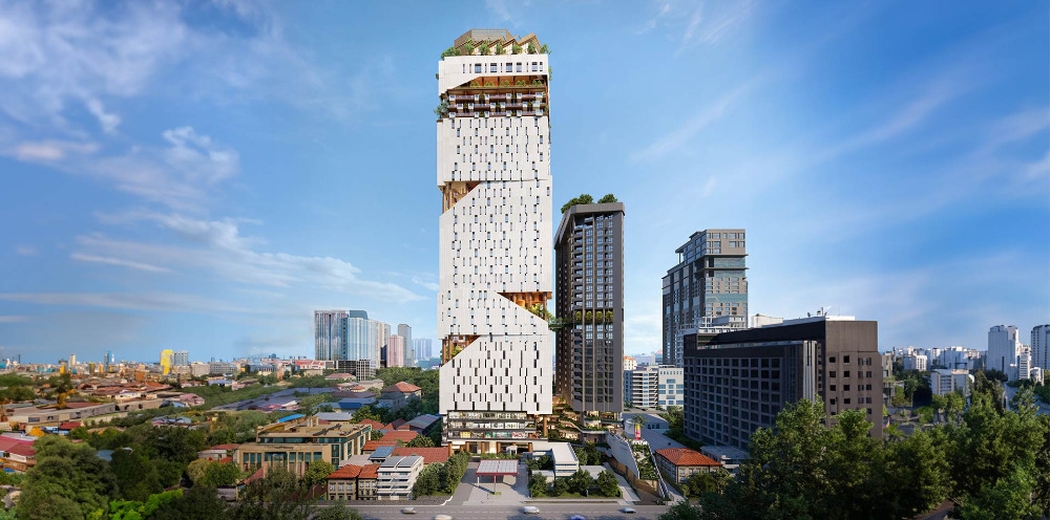
Phnom Penh city skyline

Cambodia’s Tourism Market Has Recovered, But Not Fully

Before discussing Airbnb returns, it is important to understand the tourism environment that supports short-term rental demand. 

Unlike traditional residential rentals, Airbnb and short-stay accommodation depend heavily on tourism arrivals. If visitor numbers decline, occupancy rates fall. When occupancy falls, rental yields inevitably suffer. 

Although Cambodia’s tourism industry has made substantial progress since the pandemic years, several of the country’s most important visitor markets remain significantly below their pre-2019 levels. 

Recent tourism analysis using Angkor Wat visit data as a proxy for Cambodia’s source market mix provides a useful illustration of this trend. 

Angkor Wat of Cambodia

Cambodia Is Facing a More Challenging Tourism Environment

Recent figures from Cambodia’s Ministry of Tourism highlight just how difficult the current tourism environment remains.

Between January and May 2026, Cambodia welcomed approximately 1.54 million international visitors, down from 2.95 million during the same period in 2025, a 47.8% year-on-year decline.

The decline was driven primarily by a sharp reduction in land-border arrivals, while air arrivals also fell by nearly 20%.

Compared with its ASEAN neighbours, Cambodia experienced the region’s largest tourism decline during the same period. While countries such as Vietnam, Indonesia and Malaysia continued to record growth, or only modest declines, Cambodia’s tourism sector faced considerably stronger headwinds.

For investors considering Airbnb or other short-stay rental strategies, this matters because fewer international visitors generally translate into lower occupancy rates and greater competition among hotels, serviced apartments and short-term rental operators.

Why This Article References Angkor Ticket Sales

Some readers may wonder why this article references Angkor Enterprise ticket sales when discussing Cambodia’s tourism market.

It is a fair question. Not every visitor to Cambodia travels to Siem Reap or visits Angkor Wat. Excluding visitors arriving from neighbouring Thailand, Vietnam and Laos, approximately 50.8% of international visitors purchase an Angkor ticket.

However, what matters is not whether every visitor goes to Angkor, but how closely Angkor ticket sales reflect broader tourism trends.

According to analysis by Mekong Strategic Capital (MSC), using data published by Angkor Enterprise (APSARA Authority) and the Cambodia Ministry of Tourism, Angkor ticket sales have historically demonstrated an exceptionally strong correlation with Cambodia’s official international visitor arrivals across many of the country’s largest tourism source markets.

MarketCorrelation
United States0.98
China0.97
United Kingdom0.96
France0.96

These are remarkably strong correlations by economic standards.

In addition, Angkor Enterprise publishes its figures much earlier than official Ministry of Tourism reports, making ticket sales one of the most useful leading indicators of Cambodia’s tourism performance.

(Graphic: Research and analysis done by Mekong Strategic Capital)

Cambodia’s High-Spending Visitor Markets Remain Below 2019 Levels

Comparing the first five months of 2026 against the same period in 2019, estimated tourism spending from many major visitor markets remains well below historical levels: 

Country Estimated Change in Tourism Spend 
United States -39% 
United Kingdom -31% 
France -26% 
Australia -13% 
Germany -35% 
Japan -67% 
South Korea -67% 
Vietnam -91% 
Philippines -84% 
Thailand -99% 
China -94% 


Perhaps the most striking figure is China. 

In the first five months 2019, Chinese visitors represented approximately 482,000 arrivals and accounted for an estimated 34% of spending among Cambodia’s fifteen largest tourism source markets. 

In 2026, that share has fallen to less than 6%. 

Meanwhile, several historically important regional tourism markets, including South Korea, Japan, Vietnam, Thailand and the Philippines, remain significantly below pre-pandemic levels. 

While long-haul Western markets such as the United States, United Kingdom, France and Australia have demonstrated greater resilience, they have not fully compensated for the decline in regional tourism spending. 

High-spending visitors visiting Cambodia

Why This Matters for Airbnb Investors

Many investors assume that because Cambodia receives millions of visitors each year, Airbnb occupancy should naturally be strong. 

Unfortunately, the reality is more complicated. 

A condominium listed on Airbnb is competing against: 

  • International hotel chains 
  • Boutique hotels 
  • Serviced apartments 
  • Guesthouses 
  •  Resort operators 
  • Condotels 
  • Thousands of other Airbnb listings 

When tourism demand softens, accommodation providers compete aggressively on pricing and occupancy. 

This is particularly noticeable in Siem Reap and Sihanoukville, where many operators continue to offer discounted room rates to attract guests. 

As a result, investors should be cautious when evaluating projections based on exceptionally high occupancy assumptions. 

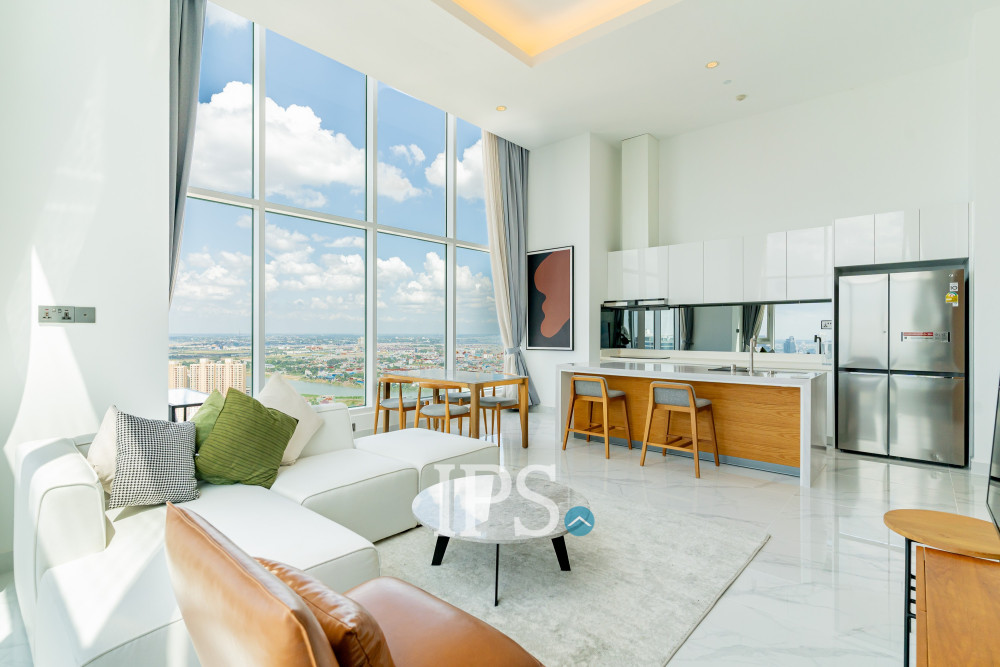
Inside a condo for investment in Cambodia Phno Penh

The Difference Between Gross Yield and Net Yield

When developers or sales agencies advertise double-digit rental returns, investors should always ask a critical question: 

Is the advertised figure gross yield or net yield? 

Many marketing presentations calculate returns using ideal assumptions, including: 

  • Near-full occupancy 
  • Peak-season nightly rates 
  • No vacancy periods 
  • No management fees 
  • No maintenance costs 
  • No utilities 
  • No furnishing expenses 
  • No booking platform charges 

These assumptions rarely reflect actual operating conditions. 

A realistic investment analysis should account for: 

  • Airbnb management fees 
  • Cleaning expenses 
  • Utilities 
  • Repairs and maintenance 
  • Booking platform fees 
  • Vacancy periods 
  • Furniture replacement 
  • Wear and tar 
  • Property management charges 

Once these costs are included, actual returns often look very different from headline marketing figures. 

The difference between gross yield and net yield

What Returns Does Airbnb Actually Generate?

IPS Cambodia does not directly manage Airbnb properties. Instead, we work alongside trusted Super host operators and short-stay management providers in Phnom Penh, Siem Reap and Sihanoukville. 

Based on market experience, most professionally managed Airbnb units achieve approximately 4% to 6% net annual yield depending on: 

  • Property location 
  • Building quality 
  • Occupancy rates 
  • Competition 
  • Seasonality 
  • Management costs 

While some exceptional properties may outperform these averages, they are not representative of the broader market. Generally too, host operators charge around 25% of the gross income as a management fee, eating into your overall returns.  

Rental return of Airbnb in Cambodia

A Realistic Example

Consider a one-bedroom condominium in Phnom Penh valued at $60,000. 

The owner may successfully achieve: 

  • Average nightly rate: $30 
  • Occupancy: 10 nights per month 

This generates: 

  • Gross monthly revenue: $300 

After management fees, cleaning costs, booking platform charges and operational expenses, approximately 25% may be deducted. 

This leaves: 

  • Net monthly income: approximately $225 

Annualized: 

  • Net annual income: $2,700 

Against a purchase price of $60,000, this represents a net yield of approximately 4.5%. 

While stronger-performing properties may occasionally achieve higher occupancy, maintaining such performance consistently throughout the year remains challenging. 

J Tower 2 penthouse strong rental return in Phnom Penh BKK1 Cambodia

Why Long-Term Rentals Often Deliver Better Results

Many investors are surprised to discover that traditional residential leasing often produces superior results compared to Airbnb. 

Long-term rentals provide several advantages: 

Higher Occupancy 

A long-term tenant may occupy a unit continuously for 12 months. 

An Airbnb unit may sit vacant for significant portions of the year. 

Lower Tenant Acquisition Costs 

Finding one quality tenant is typically less expensive than acquiring dozens or hundreds of short-term guests annually. 

Security Deposits 

Long-term tenants generally provide a security deposit before moving in, helping protect owners against damage and unpaid bills. 

Lower Maintenance Costs 

Units occupied by a single tenant generally experience less wear and tear than those accommodating a constant stream of short-stay guests. 

More Predictable Income 

Rental income becomes easier to forecast and manage, reducing investment risk. 

Long term return gives better result

What Are Typical Long-Term Rental Returns in Cambodia?

Across Phnom Penh’s established condominium market, investors typically achieve net rental yields ranging from approximately 6.5% to 8.5% per annum. 

The exact return depends on: 

  • Property location 
  • Purchase price 
  • Building quality 
  • Tenant demand 
  • Property management quality 

For example: 

A condominium purchased for $75,000 and rented for $500 per month generates annual gross income of $6,000. 

After accounting for normal ownership expenses, investors can often achieve net returns within the 6.5% to 8.5% range. 

Importantly, these returns are supported by: 

  • Higher occupancy rates 
  • Longer lease terms 
  • Lower turnover costs 
  • Reduced management expenses 

This is one of the reasons many experienced investors continue to favor conventional leasing strategies. 

Typical Long-Term Rental Returns in Cambodia

Is a 15% Airbnb Yield Possible?

Technically, yes. 

Realistically, very rarely. 

To generate a genuine 15% net annual return from Airbnb, an investor would typically require: 

  • Exceptionally high occupancy 
  • Premium nightly rates 
  • Minimal vacancy 
  • Low operating costs 
  • Strong year-round tourism demand 
  • Minimal maintenance expenses 

Very few properties consistently meet all these conditions simultaneously. 

In practice, many advertised 15% returns represent theoretical best-case scenarios rather than achievable long-term performance. 

Investors should always request: 

  • Historical occupancy data 
  • Historical rental statements 
  • Property management reports 
  • Actual owner returns 
  • Net income calculations after expenses 

If such information cannot be provided, investors should proceed cautiously. 

Rental return via Airbnb in Cambodia

For Higher Returns, Consider Guaranteed Rental Return (GRR) Opportunities

It is important to distinguish between Airbnb income and Guaranteed Rental Return (GRR) programs. 

Many investors are confused by the two. 

A short-stay rental relies on market demand and occupancy. 

A GRR investment relies on a contractual agreement. 

Under a GRR structure, the return is guaranteed by the developer, project operator or commercial tenant for a fixed period. 

This means investors are less dependent on: 

  • Tourism demand 
  • Occupancy fluctuations 
  • Seasonal trends 
  • Daily room rates 

Instead, income is supported by a contractual obligation. 

Guaranteed Rental Return (GRR): What is it?

Examples of GRR Opportunities in Cambodia

Several projects have introduced structured rental return programs, including: 

Odom Commercial Units 

Odom’s commercial component has introduced opportunities where income is supported through structured leasing arrangements within one of Phnom Penh’s most prestigious mixed-use developments. From a $240,000 investment, investors can get a 40% guaranteed rental income in the first 5 years of holding, and a guaranteed buyback at the end of year 5 at a 10% price increase from the purchase price. This means a guaranteed 50% return in 5 years, including a guaranteed exit. 

Odom Phnom Penh commercial unit GRR investment

Click here to see more about Odom! 

Diamond Bay Garden 

OCIC’s Diamond Bay Garden project has also introduced 10 year guaranteed rental return programs designed to provide investors with greater income certainty, leveraging their partnership with Ascott Somerset hotels group. Buyers can enjoy 70% guaranteed return in 10 years. 

Diamond Bay Garden Phnom Penh condo investment returns

Parc21 

Nearby the Russian market, Parc21 is able to offer 7% GRR for 3 years term on selected units, leveraging their highly successful condotel. 

Parc 21 condo investment returns

UC88 

UC88 has marketed selected units with long-term 6% per annum guaranteed return structures extending up to ten years. 

UC88 BKK1 Phnom Penh condo investment returns 

Important Considerations

A guarantee is only as strong as the organization providing it. 

Before investing in any GRR project, buyers should carefully evaluate: 

  • Developer track record 
  • Financial strength 
  • Contract terms 
  • Payment mechanisms 
  • Exit conditions 
  • Long-term sustainability 

A guaranteed return should be viewed as one component of an investment decision, not the sole reason for purchasing a property. 

What About Cambodia's New Visa-Free Access for Chinese Tourists?

Cambodia recently announced visa-free entry for Chinese visitors, a move widely expected to support future tourism growth. 

This is undoubtedly positive news for the country’s hospitality sector and may contribute to stronger occupancy rates over time. 

However, investors should distinguish between future potential and current market performance. 

While increased Chinese arrivals may strengthen demand for hotels and short-stay rentals in the years ahead, investment decisions should be based primarily on today’s achievable rental income rather than optimistic forecasts. 

Prudent investors evaluate opportunities using current market data and treat future tourism growth as potential upside rather than a certainty. 

Read more: Cambodian Visa Application and Essential Information 

Why Investors Trust IPS Cambodia

For more than 17 years, IPS Cambodia has been one of the country’s most established real estate agencies, operating across Phnom Penh, Siem Reap, Sihanoukville, Kampot, Kep and other major markets nationwide. 

Unlike agencies focused exclusively on selling property, IPS has built its reputation through: 

Our rental teams work directly with landlords and tenants every day. 

This provides firsthand insight into: 

  • Actual rental rates 
  • Occupancy levels 
  • Leasing demand 
  • Property performance 
  • Market trends 

When advising investors, our objective is simple: Provide realistic expectations supported by real market data. 

Sometimes that means telling a client that a property is unlikely to achieve the returns promised elsewhere. 

In the long term, however, accurate advice is far more valuable than unrealistic projections. 

The success of our clients depends on achieving sustainable investment outcomes, not simply making a purchase. 

Frequently Asked Questions (FAQ)

What is the average condo rental yield in Cambodia?

Answer: Real-world market data shows that professionally managed Airbnb units in Cambodia typically achieve a 4% to 6% net annual yield due to high management fees and seasonal vacancy. In contrast, traditional long-term residential leases consistently deliver higher, more stable net yields ranging from 6.5% to 8.5% per annum.

Is a 15% Airbnb rental return possible in Phnom Penh?

Answer: While a 15% gross return might be possible during absolute peak tourism seasons with 100% occupancy, it is highly unrealistic as a sustainable, year-round net return. Once you subtract platform booking fees, maintenance, utilities, and standard 25% operator management fees, actual net returns drop significantly.

What is a Guaranteed Rental Return (GRR) in Cambodia real estate?

Answer: A Guaranteed Rental Return (GRR) is a contractual agreement where a developer or property operator guarantees the buyer a fixed percentage of rental income (often between 6% to 10% annually) for a set number of years, shielding the investor from tourism and occupancy fluctuations.

Contact us: 

  • Telegram / WhatsApp: +855 77 959 861 
  • Email: inquiry@ips-cambodia.com 

Leave a Comment